Growth Multiplies HR Risk
The HR practices that worked when you had 12 employees may not be enough when you have 40, particularly if your employees are now working in different states.
Growth changes a business in ways that aren’t always obvious. As you add employees and managers, open new locations or hire people in other states, you are also adding HR responsibilities that may not have existed when the company was smaller.
This came up during our Scaling Almost Broke Us webinar, where we looked at a company that had grown from 12 to 40 employees. SevenStar HR CEO Jackie Gernaey raised an important point during the discussion:
“As you increase in size, you increase your risk.”
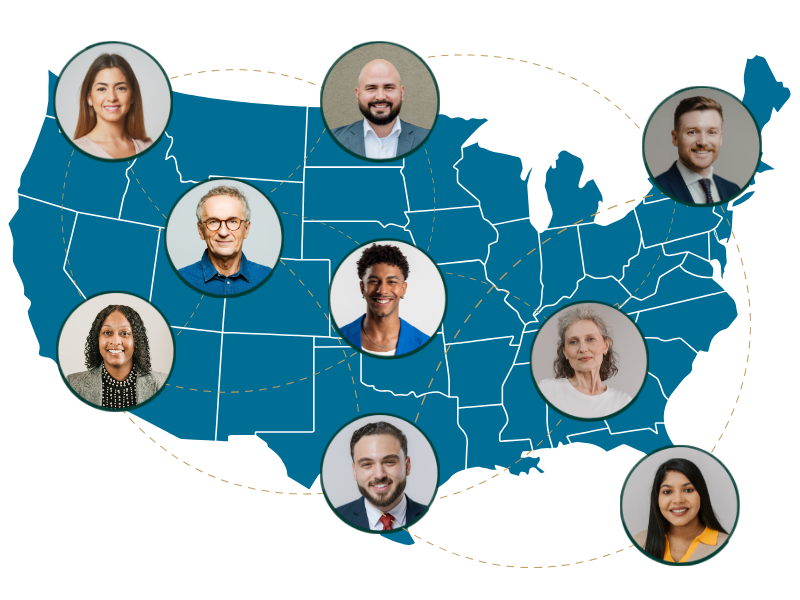
Her example was a company that now had employees in six states. The company hadn’t simply become more geographically dispersed; it now needed to understand the HR requirements that applied in each of those states.
When everyone is focused on serving customers, hiring people and keeping up with growth, changes like these can be surprisingly easy to overlook.
What worked when you were smaller may not work now
Small companies can operate informally for quite a while. The owner knows everyone, questions are dealt with as they arise, and managers may learn how to handle employee issues by following the owner’s example. Policies written several years ago may stay in place because they haven’t caused an obvious problem.
As the company grows, that becomes harder to manage. There are more employees, more managers and more situations being handled without the owner’s direct involvement. If you have started hiring remotely, you may also have employees working under different state or local requirements. At some point, relying on “this is how we’ve always done it” is no longer enough.
That doesn’t mean everything you did before was wrong. It means the business has changed, and it’s worth checking whether your HR practices have changed with it.
Growth can change your HR responsibilities
One of the easiest changes to overlook is where your employees are working. Hiring the right person in another state may make perfect sense for the business, but it can also mean there are different employment requirements to consider. The same is true as your overall headcount increases, because requirements that didn’t apply to a smaller employer may become relevant as you grow.
Jackie also described a reaction she often encounters from owners focused on growing the business:
“HR regulations? I can’t deal with that. I’m trying to grow the business.”
It’s understandable. When customers need attention, new employees need to be hired and the business is moving quickly, reviewing HR requirements may not feel urgent. The problem is that those requirements don't stand still while the company grows.
Business owners don’t need to become employment-law experts themselves, but someone needs to be paying attention to what has changed. That includes reviewing whether your employee handbook and policies are still appropriate, whether managers understand their responsibilities, and whether the way you hire, manage and document employee matters still fits the company you have today.
If you’re not confident about the answers, that doesn’t necessarily mean you have a serious HR problem. It does mean you have something worth checking.
Good documentation becomes more important as you grow
The webinar discussion also moved into the wider issue of compliance, where Judy Wilks emphasized the importance of having requirements clearly documented so that people know what needs to be done. She shared an example of auditors encountering records that were so difficult to navigate that it became hard to establish what was actually there.
The same principle applies to HR. A policy isn’t much help if managers don’t know where to find it, and a process that only one person understands becomes increasingly risky as more people become involved in running the business.
Good documentation doesn’t have to mean adding layers of bureaucracy. It should make the business easier to run by giving managers clear guidance, helping employees receive more consistent treatment and making it easier to establish what happened if a decision or process is ever questioned.
It’s better to find the gaps before they become problems
One of the difficulties with HR risk is that there may be no obvious indication that something is wrong. Employees continue working, payroll runs, managers deal with issues and the company keeps growing. It can be tempting to assume that if nothing has gone seriously wrong, your existing HR practices must be working.
Often, it takes a change or an employee issue to prompt a closer look. You hire your first employee in another state, a manager handles a situation badly, an employee raises a concern, or someone finally realizes that the handbook hasn’t been reviewed in several years. By then, you’re looking at HR because you have to rather than because you chose to.
That is why Jackie recommended taking a more proactive approach during the webinar, using an HR MRI assessment to understand where the business currently stands and where there may be areas of risk.
Take another look as your business grows
If your company looks very different today than it did a few years ago, it makes sense to check whether your HR has kept pace. Look at where your employees are working, whether your policies and handbook are still current, whether managers understand what is expected of them, whether important HR processes and decisions are being documented, and whether your approach to hiring and managing people still makes sense for the size of business you have now.
You may find that much of what you already have is working well. You may also uncover things that made perfect sense when you had 12 employees but need some attention now that you have 25, 40 or more.
The important thing is to know.
SevenStar’s HR MRI Assessment® provides a structured review of your current HR practices so you can identify what is working, where there may be gaps or risks, and what deserves your attention first.
Growth is a good reason to revisit your HR practices. The business you have today shouldn’t still be relying on the HR infrastructure you built for the business you used to be.
This article grew out of the risk and compliance discussion in Scaling Almost Broke Us, where Jackie Gernaey of SevenStar HR joined Dr. Frumi Barr and Judy Wilks to look at what happens when growth puts new pressure on People, Finance and Operations.
Want a quick check on how well your business is handling growth? Download our free 10-question Scaling Stress Test →